
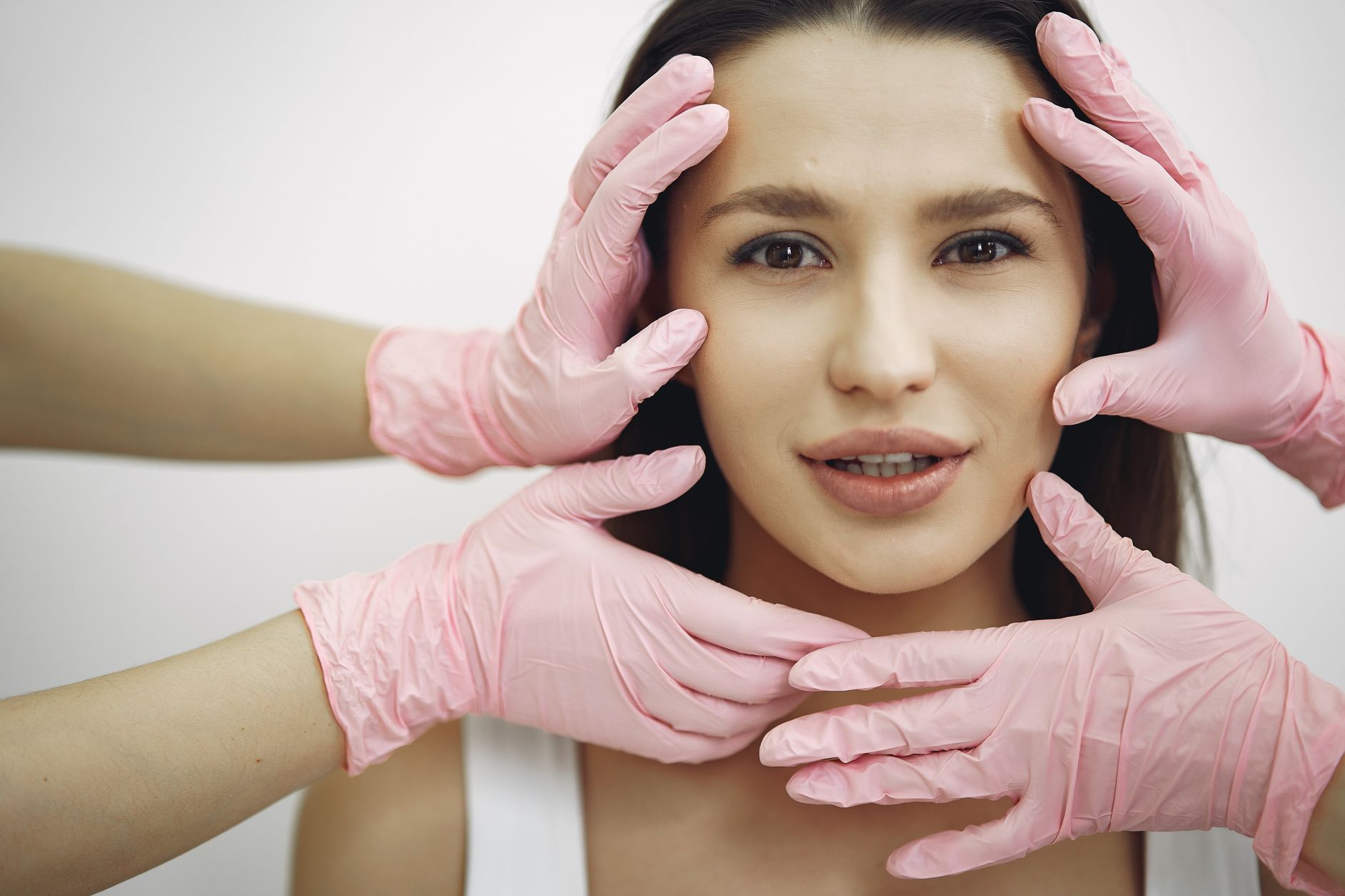
HIFU Face Lift Abu Dhabi 2026-2027: Costs, Results & How to Choose a Clinic
HIFU Face Lift in Khalifa City Abu Dhabi 2026–2027: What to Expect, Realistic Costs & How to Choose the Right Clinic
If you have been researching non-surgical facial rejuvenation in Abu Dhabi, you have almost certainly encountered HIFU. Clinics across Khalifa City and the wider UAE market it enthusiastically, but the online information available tends to read more like a brochure than a balanced patient guide. This article takes a different approach: transparent, evidence-based information that helps you decide whether HIFU is genuinely suited to your concerns—or whether an alternative would serve you better.
What HIFU Technology Actually Does (The Mechanism)
HIFU stands for High-Intensity Focused Ultrasound. The device delivers focused ultrasound energy to precise depths within facial tissue—typically the superficial musculoaponeurotic system (SMAS) layer, the same anatomical layer addressed in surgical facelifts—without cutting the skin surface.
At the focal point, the concentrated energy creates a thermal coagulation zone. The controlled thermal injury triggers a wound-healing response in the tissue: fibroblasts migrate to the area and, over subsequent weeks, produce new collagen and elastin fibres. The key distinction from surface-level treatments is depth: HIFU can reach 1.5 mm, 3 mm, or 4.5 mm beneath the skin, depending on the transducer selected.
This is the mechanism. It is important to separate mechanism from guaranteed outcome—tissue response varies significantly between individuals based on age, skin condition, baseline collagen density, and lifestyle factors.
Enfield Royal Clinic perspective: Our practitioners in Khalifa City use clinically validated HIFU platforms and select transducer depths based on your individual anatomy, not a one-size-fits-all protocol. Learn more about our approach on our HIFU Skin Tightening service page.

Realistic Expectations: What Results Look Like and When
This is the section most clinic websites skip—and it is arguably the most important for informed decision-making.
Immediate post-treatment: You may notice a very subtle tightening effect immediately, but this is largely due to initial tissue response and does not represent final results.
Weeks 2–6: The collagen remodelling process begins in earnest. Some patients notice gradual improvement; others see little change during this phase.
Months 2–6: This is when the majority of visible improvement typically appears for appropriate candidates. The lifting and tightening effect becomes more defined as new collagen matures.
Individual variation is significant. Younger patients (typically 30s–45s) with mild-to-moderate laxity and reasonable baseline skin quality tend to respond more noticeably. Patients with advanced skin laxity, significant volume loss, or who smoke heavily may see more limited outcomes. Results are not guaranteed and outcomes vary person to person.
As for longevity: results are not permanent. The underlying ageing process continues, and most patients who respond well consider a maintenance session after a period of time—but the appropriate interval depends on your individual response, not a fixed schedule that applies universally.
For a broader comparison of what non-surgical options can and cannot achieve, our guide to non-surgical face lifts in Khalifa City provides useful context.
Who Is a Good Candidate for HIFU?
HIFU is not universally appropriate. Honest candidate assessment is one of the most important services a qualified practitioner provides.
Patients who tend to benefit most:
- Adults typically in their late 20s to mid-50s with mild to moderate skin laxity
- Patients with good underlying skin quality who want to slow or partially reverse early ageing changes
- Those who want to avoid surgery and accept that non-surgical results will be more modest than surgical outcomes
- Patients in good general health without contraindications
Patients for whom HIFU may deliver suboptimal results or is contraindicated:
- Advanced skin laxity where volume loss is the primary concern (dermal fillers or surgical intervention may be more appropriate)
- Active skin infections, open wounds, or inflammatory acne in the treatment area
- Pregnancy
- Patients with implanted electronic devices (pacemakers, cochlear implants) in or near the treatment area
- Metal implants or threads in the target tissue—previous thread lift patients should disclose this at consultation
- Certain cystic or severe acne conditions
- Patients with unrealistic expectations who are seeking surgical-level transformation from a non-surgical device
A practitioner who does not conduct a thorough assessment—or who suggests HIFU is suitable for everyone—is not providing you with appropriate care.
If you are weighing HIFU against other options, our comparison of thread lift versus surgical facelift in Abu Dhabi outlines where each modality sits on the intervention spectrum.
The Treatment Process: During and After
During treatment: A topical anaesthetic is usually applied 30–45 minutes before the procedure to improve comfort. The handpiece is moved across the treatment areas in a systematic pattern. Most patients describe the sensation as intermittent heat or a brief stinging feeling at the focal points. Sessions typically range from 45 to 90 minutes depending on the areas treated.
Immediately after: Redness, mild swelling, and tingling are common. These typically resolve within hours to a day or two. Some patients experience temporary numbness or a slight bruised sensation in localised areas—this is usually transient.
Downtime is real, even if brief. HIFU is often marketed as requiring zero downtime. The accurate picture: social downtime is minimal for most patients, but physical side effects do occur and you should plan accordingly. Avoid intense exercise, significant sun exposure, and heat-based activities (saunas, steam rooms) for a short period following treatment—your practitioner will advise on the specific duration based on your response.
Post-treatment care: Use a gentle cleanser, broad-spectrum SPF daily, and avoid harsh active ingredients (retinoids, acids) for the period recommended by your provider.
Potential Side Effects and Contraindications: An Honest Account
HIFU carries a favourable safety profile when performed correctly by qualified practitioners on appropriate candidates—but it is not without risks.
Common, expected effects: Temporary redness, swelling, tingling, tenderness.
Less common effects: Bruising, temporary numbness, a sensation of mild muscle soreness.
Rare but documented risks: In cases where treatment depth or intensity is inappropriate for the patient's anatomy, nerve irritation has been reported. This highlights why practitioner training and device calibration matter—HIFU energy delivered to the wrong depth or by an undertrained operator carries real risk.
Do not proceed with treatment at any clinic that cannot clearly explain these risks or that dismisses your questions about side effects.
HIFU Face Lift Cost in Abu Dhabi: What Affects Pricing
Transparent pricing is something Enfield Royal Clinic believes patients deserve. In the Abu Dhabi market for 2026–2027, HIFU face lift pricing varies based on several legitimate factors:
- Treatment area: Full face and neck versus individual zones (jawline, brow, décolletage) carries different pricing
- Number of shots/lines: More comprehensive protocols with higher shot counts take longer and require more consumables
- Device technology used: Clinical-grade devices with validated energy delivery differ from budget alternatives
- Practitioner seniority: A senior dermatologist or cosmetic physician will typically command a higher consultation and treatment fee
- Clinic overhead and standards: A regulated, fully equipped medical facility in Khalifa City operates under different cost structures than a budget walk-in centre
For a comprehensive understanding of what facial treatments cost across the Abu Dhabi market, our facial treatment pricing guide for 2026–2027 breaks down typical ranges and what drives price differences.
Be cautious of unusually low pricing. Clinical-grade HIFU on validated devices with qualified practitioners has a real cost base. A session priced far below the market median often signals compromises in device quality, shot count, or practitioner training.
How to Evaluate Practitioner Qualifications in the UAE
This is a gap in almost every HIFU guide available online in the Abu Dhabi market—and it matters significantly to your safety and outcome.
What to verify before booking:
UAE Department of Health (DoH) or MOHAP licensure: All practitioners performing aesthetic medical treatments in Abu Dhabi must hold a valid DoH licence. Ask to see this or verify on the DoH public registry.
Medical degree and specialty background: The practitioner should hold a medical degree (MBBS or equivalent) and ideally have postgraduate training in dermatology, plastic surgery, or aesthetic medicine. Cosmetic treatments in the UAE are medical procedures.
Specific HIFU training and certification: Ask whether the practitioner has completed formal training on the specific device being used. Device manufacturers typically provide clinical training; ask whether it has been completed.
Clinic facility standards: The clinic should be licensed as a medical facility under DoH or the relevant Abu Dhabi health authority. This is not optional—it is a legal requirement and a patient protection measure.
Transparency at consultation: A qualified practitioner will take a medical history, assess your candidacy honestly (including telling you if HIFU is not your best option), explain risks, and provide realistic expectations. If a consultation feels like a sales pitch rather than a clinical assessment, reconsider.
At Enfield Royal Clinic in Khalifa City, our HIFU treatments are performed by licensed medical professionals operating under full DoH regulatory compliance. If you want to understand what finding a qualified provider looks like in practice, our guide to HIFU treatment near me in 2026 addresses how to assess local clinic options.
HIFU Compared to Alternatives: Where It Sits in the Landscape
HIFU occupies a specific position on the treatment spectrum. Understanding where it sits helps you make a genuinely informed decision.
| Option | Invasiveness | Downtime | Results Depth | Longevity |
|---|---|---|---|---|
| HIFU | Non-surgical | Minimal | SMAS layer | Variable, individual |
| Thread lift | Minimally invasive | 1–2 weeks | Subcutaneous | Variable |
| Profhilo / bio-remodelling | Injectable | Minimal | Dermal | Requires maintenance |
| Surgical facelift | Surgical | Weeks | SMAS + skin | Long-lasting |
HIFU versus thread lift: Thread lifts provide a more immediate mechanical lift using absorbable sutures inserted under the skin. They involve a minor procedure with more recovery. For a detailed comparison relevant to Abu Dhabi patients, see our thread lift treatment guide.
HIFU versus Profhilo: These address different concerns. Profhilo is a bio-remodelling injectable that targets skin hydration and quality. It is complementary to HIFU rather than a direct alternative, and some patients benefit from combining approaches. Our Profhilo treatment guide for Abu Dhabi explains this distinction in detail.
HIFU versus surgical facelift: If skin laxity is advanced, surgery remains the gold standard for significant, long-lasting lifting. HIFU is not a substitute for surgical outcomes. Recommending HIFU when surgery would actually serve you better is not honest clinical practice.
Making Your Decision: A Framework for Khalifa City Patients
Before booking any HIFU treatment in Abu Dhabi, ask yourself—and your prospective clinic—the following:
- Has a qualified practitioner assessed whether I am a suitable candidate, or did I receive an immediate 'yes' without clinical assessment?
- Has the clinic disclosed realistic outcomes, including the possibility of limited results for my specific skin condition?
- Do I understand the actual side effects and what post-treatment care involves?
- Is the pricing transparent, and does the quoted session include a meaningful shot count on a clinical-grade device?
- Can the clinic demonstrate DoH licensure for both the facility and the practitioner?
If any of these questions are met with evasion, you have important information about the quality of care on offer.
Enfield Royal Clinic's Khalifa City location is accessible from across Abu Dhabi and serves patients from Dubai and Sharjah who prioritise a premium, medically rigorous approach. We are committed to honest consultation—which includes telling patients when HIFU is not the right choice for their concerns.
Ready to Explore Whether HIFU Is Right for You?
The right starting point is not booking a treatment—it is booking a proper clinical consultation. At Enfield Royal Clinic in Khalifa City, our practitioners assess your skin, your concerns, and your expectations honestly before recommending any intervention.
Book your HIFU consultation with Enfield Royal Clinic and receive an evidence-based assessment rather than a sales appointment.
Ready to Begin Your Transformation?
Book a free consultation with our specialist team at Enfield Royal Clinic Khalifa City.